
Most conversations about commercial kitchen flooring focus on safety and compliance, which are absolutely the right priorities. But there’s another angle that kitchen operators and facility managers think about just as seriously: cost. Not just the upfront cost of installation, but the total cost of ownership over five, ten, and fifteen years. When you run those numbers honestly, epoxy flooring from a professional installer looks very different from what first-time buyers might expect.
Why Does Flooring Cost More Than You Think Over Time?
The purchase price of any floor is just the beginning of the financial story. Tile floors in commercial kitchens require ongoing regrouting as joints crack and wear under thermal stress and heavy traffic. Every regrouting project means taking your kitchen out of service for a period of time. Lost production hours during a kitchen shutdown translate directly into lost revenue, and that cost doesn’t appear anywhere on the original tile invoice.
Beyond regrouting, cracked or damaged tile needs periodic replacement. Tiles that shift because the substrate beneath them has been compromised by moisture intrusion can become uneven surfaces that create trip hazards and lead to expensive repair projects. When you add up regrouting costs, tile replacement, cleaning labor for maintaining grout-filled joints, and downtime from repair projects, the “cheaper” tile floor often ends up costing significantly more over a ten year period than a properly installed epoxy system.
How Does Epoxy Reduce Ongoing Maintenance Costs?
The economics of commercial kitchen flooring with epoxy are straightforward once you understand what you’re not paying for. There’s no regrouting because there are no grout joints. There’s no tile replacement because a properly installed epoxy system doesn’t crack or delaminate under normal commercial kitchen conditions. The seamless, non-porous surface is faster to clean than tile, which reduces the daily labor time your staff spends on floor maintenance.
HPS Flooring’s systems are designed with chemical resistance that allows the floor to withstand repeated exposure to the harsh sanitizers used in commercial kitchens without degrading. That chemical resistance protects the floor’s surface integrity over time, which means the maintenance requirements stay low throughout the floor’s service life rather than increasing as the floor ages and develops vulnerabilities.
What Is the Return on Investment for an Epoxy Kitchen Floor?
The ROI calculation for an epoxy system considers the reduced maintenance costs, the longer service life compared to tile, the savings from avoiding unplanned downtime for emergency repairs, and the reduced labor time for daily cleaning. For most commercial kitchen operators, these factors combine to make a professionally installed epoxy floor a net positive financial decision compared to maintaining tile over the same period.
HPS Flooring has been making this case to commercial kitchen operators across New Jersey, New York, and Pennsylvania since 1988. Over 37 years of installations means they’ve had the opportunity to see how their floors perform over the long term, and that track record backs up the ROI argument with real-world results rather than projections.
Does Faster Installation Save Money Too?
Downtime is one of the most significant costs in any kitchen flooring project. A contractor who takes two weeks to complete an installation when three days would suffice is costing you real money in lost production. HPS Flooring typically completes kitchen-sized installations in approximately three days, working around each client’s schedule to minimize the impact on operations.
For operators specifically researching commercial kitchen flooring NJ solutions with fast turnaround times, HPS Flooring’s ability to complete most projects in that three-day window is a meaningful financial advantage. Their team works flexible hours, including off-hours and overnight schedules when clients need it, to get the kitchen back to full production as quickly as possible after installation.
Does the Floor Add Value Beyond Direct Cost Savings?
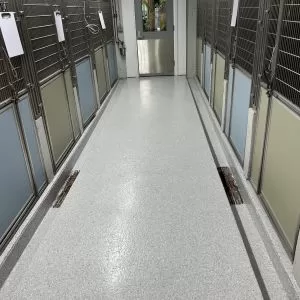
A kitchen floor that passes health inspections consistently, provides a slip-resistant surface that protects staff, and looks clean and professional contributes to your operation in ways that extend beyond the maintenance budget. Staff morale improves when people work in a well-maintained environment. Health inspection results affect your public reputation in ways that have real business consequences. A floor that helps you maintain a perfect inspection record is contributing value that doesn’t show up in a maintenance cost spreadsheet but absolutely shows up in your business performance.
The durability of a professionally installed epoxy system also provides a form of operational insurance. Floor failures don’t happen on convenient schedules. Emergency repairs in the middle of a busy season are expensive and disruptive in ways that planned maintenance never is. A floor system with a long, reliable service life removes that unpredictability from your operational planning.
Conclusion
The financial case for epoxy commercial kitchen flooring isn’t complicated once you move beyond the sticker price comparison. Reduced maintenance costs, eliminated regrouting expenses, faster daily cleaning, a longer service life, and minimal unplanned downtime combine to make a professional epoxy installation one of the smartest investments a kitchen operator can make in their physical facility. HPS Flooring’s free consultation gives every potential client a clear picture of the specific value this type of system would deliver for their kitchen, without any pressure to commit before you’re ready.
FAQ
Why is epoxy more cost-effective than tile in a commercial kitchen? Epoxy eliminates regrouting costs, reduces daily cleaning labor, and has a longer service life than tile with grout joints. Over ten years, total maintenance costs for epoxy are typically significantly lower than tile.
How does fast installation reduce costs for kitchen operators? Shorter installation time means less operational downtime. HPS Flooring completes most kitchen-sized installations in approximately three days, minimizing lost production time during the project.
Does epoxy flooring require any major maintenance after installation? Regular sweeping and damp mopping are all that’s needed. The chemical-resistant surface doesn’t require special treatments, stripping, or refinishing like other commercial floor types.